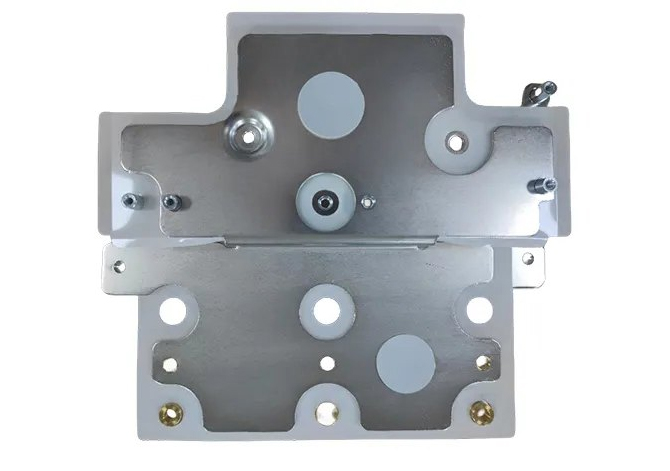
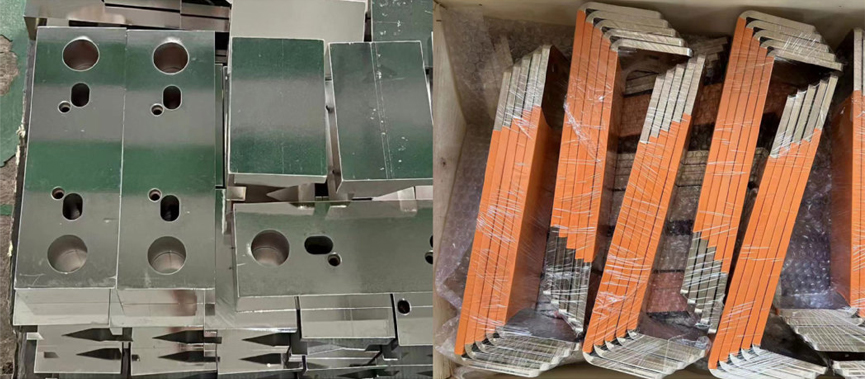
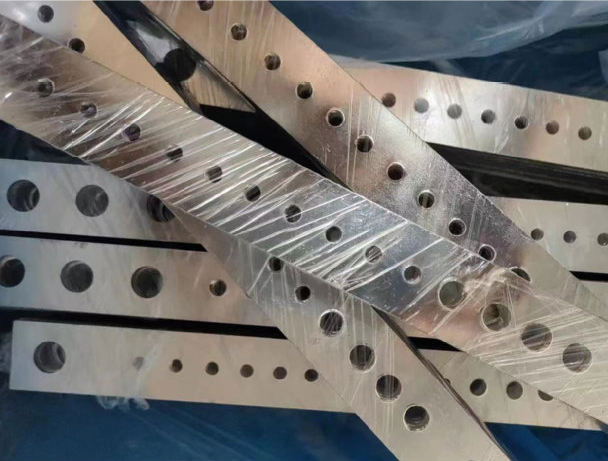
In the high-current application scenarios of new energy vehicles, smart grids, and renewable energy, tinned copper busbars have become the first choice for key conductive components due to their excellent conductivity, corrosion resistance, and process stability. In this paper, we analyze the three core steps of the tin-plating process in depth, combined with authoritative experimental data and industry application cases, to systematically demonstrate its optimization of electrical conductivity, antioxidant protection, and welding reliability to enhance the five dimensions of the technological advantages of the engineering design and selection of a scientific basis.
What are the process tinned copper busbars?
1. Upgrade of pretreatment process system
According to [GB/T 5585.1-2018] standard requirements, the base material of copper busbars should be T2 grade copper (copper + silver content ≥ 99.9%). The modern pretreatment process breaks through the traditional physical polishing method and adopts a three-stage chemical treatment method:
- Alkaline degreasing: using pH ≥ 12 NaOH solution (concentration 50 g/L) to remove surface oil and grease, the temperature control is in 60-80 ℃.
- ultrasonic shock: 40 kHz high-frequency ultrasonic waves to remove micron-sized particles of pollutants
- Pickling activation: 10% sulfuric acid solution is used to remove the oxide layer and form an active surface simultaneously.
This process reduces the surface roughness of copper busbars from the original 2.5 μm to 0.8 μm, which significantly improves the adhesion of the plating layer (see Table 1).
2. Intelligent regulation of plating parameters
Innovative introduction of pulse plating technology, through periodic current changes (frequency 100 Hz, duty cycle 30%) to achieve a dense plating layer. Compared with traditional DC plating, the tin layer porosity is reduced by 62%, and the thickness uniformity is improved to ±1.5 μm (see Table 1). Key parameters include:
- Tin ion concentration: 25-40 g/L
- Current density: 1.5-3 A/dm²
- Plating solution temperature: 20-35°C
3. Post-treatment technological innovations
A dual protection process is adopted:
- Nano-scale sealing treatment: using a silicone-containing protective agent to fill the microscopic pores.
- Antioxidant passivation: a self-repairing protective layer is formed by a chromate conversion film.
What are the advantages of Tin-plated copper busbar?
1. Optimization of electrical conductivity
| Metrics | Bare Copper | Tinned Copper | Enhancement |
|---|---|---|---|
| Contact Resistance (μΩ) | 12.3 | 8.7 | 29.3%↓ |
| Load Capacity (A/mm²) | 2.5 | 3.2 | 28%↑ |
Although the tin plating layer reduces the overall conductivity by about 5%, the conductivity of tin oxide (SnO₂) on its surface is 18 times higher than that of copper oxide (CuO), which maintains stable conductivity in long-term use.
2. Long-lasting protection against oxidation
Comparison by 168 hours salt spray test:
- Bare copper busbar: 72 hours of green rust, 168 hours of corrosion area > 30%.
- Tinned copper: 480 hours without visible corrosion, 1000 hours corrosion rate <3%.
3. Soldering reliability breakthrough
Matte tin plating (surface roughness Ra = 1.2μm) compared to bright tin (Ra = 0.3μm), welding strength increased by 40%. When Sn96.5/Ag3.0/Cu0.5 solder is used, the shear strength of the solder joint reaches 58MPa, far exceeding the 45 MPa required by the IEC standard.
4. Enhanced Heat Dissipation
The thermal conductivity of the tin-plated layer reaches 67W/m-K, and with the special pattern design, the heat dissipation efficiency can be increased by 22%. Under 200A continuous current, the temperature rise of tinned copper busbar is 18℃ lower than that of bare copper busbar.
5. Environmental and Economic Benefits
| Project | Traditional Process | Innovative Process |
|---|---|---|
| Tin consumption (g/m²) | 85 | 62 |
| Wastewater treatment cost | $1.4/m | $0.5/m |
What is the Application?
A. New Energy Vehicle Field
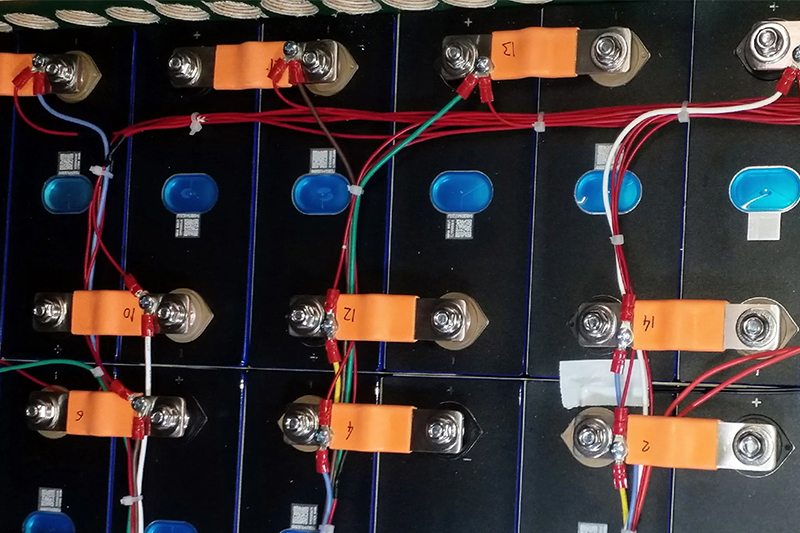
In the 800V high-voltage platform architecture, tinned copper busbars have become the standard for battery pack module connection. The Tesla 4680 battery system adopts 0.15mm ultra-thin tin-plated layer design, which increases energy density by 16%.
B. International Standards
IEC 61238-1:2018 adds a new specification for tin-plated layer thickness testing, requiring ≥8 μm plating in critical areas and 95% edge coverage.
How is the Process Flow Diagram?
Copper busbar preparation → alkaline degreasing (60℃/10min) → pickling activation (10%H₂SO₄/2min)
↓
Tin plating bath (Sn²⁺ 30g/L, 25℃) → Pulse plating (2A/dm², 15 min)
↓
Chromate passivation (50℃/30s) → Hot air drying (80℃/5min)
Conclusion
Tin-plated copper busbars, through process innovation to achieve performance breakthroughs, have higher conductive stability than bare copper busbars to improve 28% and corrosion resistance life extended by more than 5 times. With other leading enterprises continuing to promote nano-plating, gradient alloy, and other new technology research and development, tinned copper busbars will play a greater value in the smart grid, data centers, and other emerging areas. It is recommended that design units prioritize the use of tin-plated products that comply with the IEC 61238 standard and ensure long-term reliability through regular salt spray testing (refer to ASTM B117).
Related Post
Why can’t a copper busbar and an aluminum busbar be directly connected?
[email protected]2025-12-08T02:54:03+00:00December 8th, 2025|0 Comments
Introduction Copper busbars and aluminum busbars are the two most commonly used conductive materials in the field of power systems and industrial distribution. Due to differences in cost, resource availability, and technical requirements, they often

How Do You Calculate the Size of a Copper Busbar?
[email protected]2025-06-06T06:54:57+00:00June 6th, 2025|0 Comments
1. Introduction to Busbar Sizing Accurate copper busbar sizing is vital for secure, dependable, and effective electric circulation. Busbars disperse high currents in switchgear and panelboards. Inappropriate sizing reasons extreme warmth, power loss, voltage
10 Essential Tips for Working with Copper Busbars
[email protected]2025-06-03T06:35:28+00:00June 3rd, 2025|0 Comments
In modern power systems, copper busbars have actually become a core element in power transmission and distribution because of their superb electric conductivity, rust resistance and mechanical strength. As a specialist manufacturer of copper
A Guide to Maintaining Copper Busbars Effectively
[email protected]2025-05-28T06:09:36+00:00May 28th, 2025|0 Comments
As a core component of power transmission systems, copper busbars are an important choice for industry due to their high electrical conductivity, corrosion resistance and mechanical strength. However, the durability of its performance is
How to Install Copper Bus Bars for Electrical Systems
[email protected]2025-05-27T07:25:44+00:00May 27th, 2025|0 Comments
As a copper busbar manufacturer, we are well aware of its central role in electrical systems. With its excellent electrical conductivity, mechanical strength and corrosion resistance, copper busbar has become a key component in
Everything you need to know about copper busbars
[email protected]2025-05-19T02:55:47+00:00May 15th, 2025|0 Comments
Nam lacinia arcu tortor, nec luctus nibh dignissim eu nulla sit amet maximus.
Get IN TOUCH
We Deliver Any Customize Busbars
Related Posts
Nam lacinia arcu tortor, nec luctus nibh dignissim eu nulla sit amet maximus.

Nam lacinia arcu tortor, nec luctus nibh dignissim eu nulla sit amet maximus.
Nam lacinia arcu tortor, nec luctus nibh dignissim eu nulla sit amet maximus.
Nam lacinia arcu tortor, nec luctus nibh dignissim eu nulla sit amet maximus.

 English
  Arabic
  German
  Spanish
  French
  Russian
  Danish
  Japanese
  Italian
  Vietnamese
  Turkish
  Dutch
Dutch  Portuguese
  Thai
Thai  Swedish
  Korean
  Greek
Greek  Polish
  Estonian
  Esperanto
  Hindi
Hindi  Indonesian
  Latvian